

People Management in Brief
People Management is a key discipline for the success of any organization. This strategic approach to managing personnel is essential for attracting, developing, and retaining talent, as well as maximizing employee productivity and well-being. But what exactly do we mean by People Management, and why is it becoming increasingly important in today’s business environment? In this article, we will explore the concept of People Management in depth, analyzing its components, strategies, and benefits.
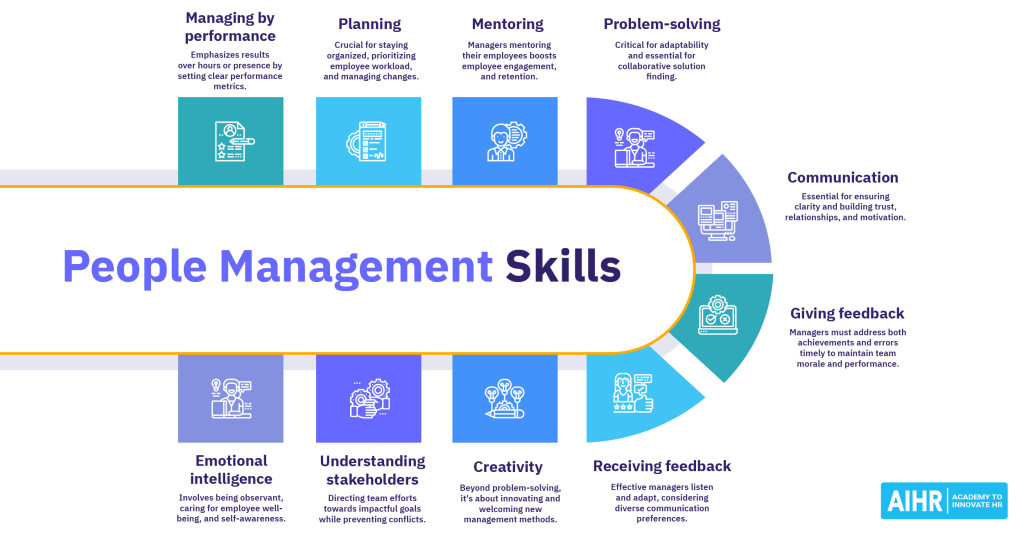
What is People Management
People Management, in addition to being a strategic approach, encompasses the set of practices, policies, and strategies implemented by an organization to effectively manage its human capital. It focuses on creating a positive work environment, planning and developing employees’ skills, managing interpersonal relationships, and promoting an inclusive corporate culture.
It is a discipline that goes beyond traditional human resources management, focusing on optimizing employee engagement, development, and well-being to enhance productivity, retention, and the overall success of the organization.
The Components of People Management
- Effective Communication: Efficient information exchange between executives, managers, and employees is essential for creating a cohesive and productive work environment. This includes the ability to actively listen to employees, respond to their needs, and clearly share the company’s objectives. Moreover, open and transparent communication fosters trust and employee engagement, contributing to overall success.
- Talent Development: This process involves identifying, developing, and retaining talent within the organization. The People Manager works to recognize employees’ strengths and create targeted growth and development opportunities. This can include training programs, personalized career plans, and fostering an environment that encourages continuous learning.
- Data-Driven Decision Making: In the context of People Management, the use of data has become increasingly important, as its analysis allows informed decisions to be made regarding human resource management. This can include analyzing employee performance, monitoring engagement metrics, and forecasting future staffing needs. The adoption of advanced technological tools, such as HR management software and data analytics, is essential to enable more strategic, goal-oriented management, improving HR efficiency.
- Goal Setting and Management: The use of clear and measurable objectives is an essential practice in People Management. These goals should be aligned with the company’s objectives and communicated effectively to employees. Goal management also includes regularly monitoring performance and providing constructive feedback. This process helps employees understand expectations and work more purposefully to achieve organizational goals.
Tools and Techniques for Effective People Management
To manage personnel effectively, it is important to adopt the most appropriate tools and techniques. Here are some key solutions:
- Employee Performance Evaluations: Use structured assessment methods to monitor performance and identify areas for improvement, providing continuous feedback to support professional growth.
- Coaching and Mentoring: Investing in coaching and mentoring programs helps develop specific skills and supports employees in their growth journey within the company.
- Use of Specialized Software: Implement People Management software to automate processes such as human resource management, performance evaluation, and training, improving efficiency and accuracy.
Common Challenges in People Management
People Management is a complex process that presents several challenges to address:
- Managing Organizational Change: Successfully adapting to organizational shifts—such as mergers, restructurings, or technological innovations—requires careful management to minimize employee impact and sustain a productive work environment.
- Creating an Inclusive and Diverse Environment: Promoting diversity and inclusion is essential, but it often requires ongoing effort to break down biases and build an environment where everyone feels valued.
- Managing Remote and On-Site Work: Finding a balance between remote and in-office work can be challenging. It requires flexible management strategies and appropriate tools to ensure employee collaboration and well-being.
Who is the People Manager
The role of the People Manager emerged from the need to create a position distinct from that of the Project Manager. Unlike the Project Manager, the People Manager is often responsible for two or more teams while also being involved in the outcomes of each team’s projects. Additionally, this role was introduced to ensure greater objectivity, providing an impartial perspective on employees’ needs.
However, many organizations have introduced this role while removing project-related responsibilities, allowing the People Manager to focus on the human aspect by conducting individual meetings with employees. These meetings are aimed at exchanging feedback, identifying and resolving personal and professional issues, and building stronger trust.
In essence, the People Manager plays a significant role in determining an employee’s personal development and progress, taking into account pre-established goals.
The Different Styles of People Management
In the world of People Management, leaders adopt different styles of human resource management depending on the situation, the employees, and the organizational goals.
Here is an overview of the main People Management styles, along with some examples:
Authoritative: This style involves the manager making decisions unilaterally and imposing rules and procedures without significantly involving employees in the decision-making process. It is often used in emergency situations or when decisions need to be made quickly and decisively.
Example: In a company where safety is a top priority, the manager may decide to temporarily halt a specific activity in the event of an imminent risk to employee safety, without consulting the team.
Participative: This style involves engaging employees in decision-making and considering their input before taking action. It is particularly effective for fostering innovation.
Example: During a team meeting, the manager asks team members to share ideas and suggestions on how to improve a business process. Employees’ opinions are taken into account when defining the new procedures.
Delegative: This style involves the manager granting employees greater decision-making autonomy. It is effective when employees are highly skilled and capable of managing their own responsibilities.
Example: In a software development company, the manager assigns programmers the task of independently setting deadlines and work methodologies for projects, trusting their technical expertise.
Coaching: This style focuses on helping employees develop their skills and abilities through continuous support and guidance from the manager, who therefore takes on the role of a coach.
Example: A sales manager may work individually with a team member to identify areas for improvement, provide targeted training, and monitor their progress in achieving sales goals.
Transformational: This style is based on motivating and inspiring employees through a shared vision and ambitious goals that encourage them to surpass their own limits.
Example: A transformational CEO may communicate a bold vision for the company’s future and inspire employees to work together to achieve it, driving the organization toward innovation and success.
The effectiveness of each of these styles depends on the context and specific situation. A good People Manager is able to adapt and apply the right style in the right context to maximize employee engagement, improve performance, and achieve organizational goals.
Why is People Management Becoming Increasingly Important?
People Management is becoming increasingly important, a trend that is particularly evident in light of recent changes in the post-COVID-19 labor market. This growing significance can be attributed to a series of converging factors that have transformed the human resources landscape. Firstly, the post-pandemic labor market has proven to be highly competitive, with many companies seeking highly qualified talent in sectors such as technology, healthcare, and remote work. As a result, organizations must pay close attention to managing their human resources in order to attract, retain, and develop the personnel they need.
Furthermore, the increasing complexity of business operations requires more sophisticated personnel management. Organizations face complex challenges, such as digitalization, globalization, and rapid changes in business models, which demand a more careful and strategic approach to human resource management. In this context, People Management plays a crucial role in ensuring that employees’ skills, knowledge, and abilities are aligned with organizational goals.
The rise of remote work is another factor that has made People Management even more essential. With an increasing number of employees working remotely, the challenges of managing people have multiplied. Managers must adapt their management practices to support employee well-being, ensure effective communication, and measure performance fairly, all while maintaining a sense of cohesion and organizational culture.
Finally, employee well-being has become a fundamental aspect of People Management. Companies are increasingly recognizing the importance of creating a healthy and sustainable work environment where employees feel motivated, engaged, and valued. This not only helps improve employee satisfaction but also has a positive impact on productivity and the company’s reputation.
People Management Software
awm suite is essentially an ecosystem for managing people in the industrial sector, placing them in the right position and ensuring total safety to increase productivity and improve life in factories and logistics through data. Thanks to real-time updating, skills, task certifications, medical check records, and personnel limitations are automatically updated, preventing time loss and contributing to increased productivity.