

Workforce Forecasting in Brief
Workforce forecasting refers to a process aimed at predicting the workload within an organization, allowing for the planning of the right workforce at the right times to manage the volume of work.
This activity allows identifying potential gaps in staffing coverage and workforce availability, and consequently finding ways to reduce costs by optimizing workforce planning initiatives.
Workforce forecasting is based on a statistical analysis that includes collecting data on employees’ demographics in the field, workers’ skills, workplace conditions, external factors, and employer actions.
The Benefits of Workforce Forecasting
It is essential for organizations to find the right balance between demand and available resources. In this regard, workforce forecasting is the method that enables companies to secure significant advantages, including in data collection and management.
In fact, thanks to statistical data analysis, it is possible to identify future workforce shortages without causing major disruptions to operations.
Furthermore, thanks to intelligent forecasting and proactive planning, companies can maximize the use of existing resources, ensuring the right amount of staff is assigned during peaks and lulls. In this context, MOM (Manufacturing Operations Management) becomes a key element, as it enables efficient planning, coordination, and control of business activities and resources through the use of tools, processes, and technologies.
In fact, workforce forecasting also allows allocating staff based on parameters such as employee availability, skills, and cost, ensuring adherence to the budget.

An Example of Workforce Forecasting
To carry out effective workforce forecasting, it is necessary to have a planning model that allows analyzing external demand and determining how much human capital is needed to meet it.
The workforce planning model encourages a thorough analysis of the workforce, which can highlight potential issues and gaps to be addressed with human capital in order to achieve the set objectives.
An optimal model will include a comprehensive and in-depth analysis of employees’ skills to identify any gaps. Indeed, identifying missing skills is essential for deciding on training activities aimed at improving the workforce, ensuring that staff with the most appropriate skills are always allocated and that external demand is met.
Tools for Workforce Forecasting
Before providing sufficient data for forecasting, it is necessary to choose a forecasting method. According to Harvard Business Review, there are three types of forecasts.
The first method, qualitative forecasting, includes techniques that use qualitative data and is often employed for innovative projects where estimating workforce demand may be difficult. An example of a qualitative forecasting technique is market research, which helps forecasters examine qualitative data as systematically as possible while filtering out biases.
The second method, on the other hand, uses statistical techniques to create future forecasts by identifying trends and seasonal or cyclical patterns. The analysis is then used to project future workforce requirements. This forecasting method assumes that past data can always be used to accurately predict the future. Nevertheless, in the long term, this method may be disrupted by changes caused by external forces.
The third and final method identified by Harvard Business Review examines factors that can influence forecasts based on historical data. It is the most sophisticated forecasting tool and is typically dynamic, being revised as additional data becomes available.
Software for Workforce Forecasting
How can you ensure you have the right number of staff to perform various tasks efficiently, even during seasonal peaks? With workforce management software!
awm suite is the ideal solution in this regard. In fact, this type of platform allows companies to plan, monitor, and manage workforce requirements and skills.
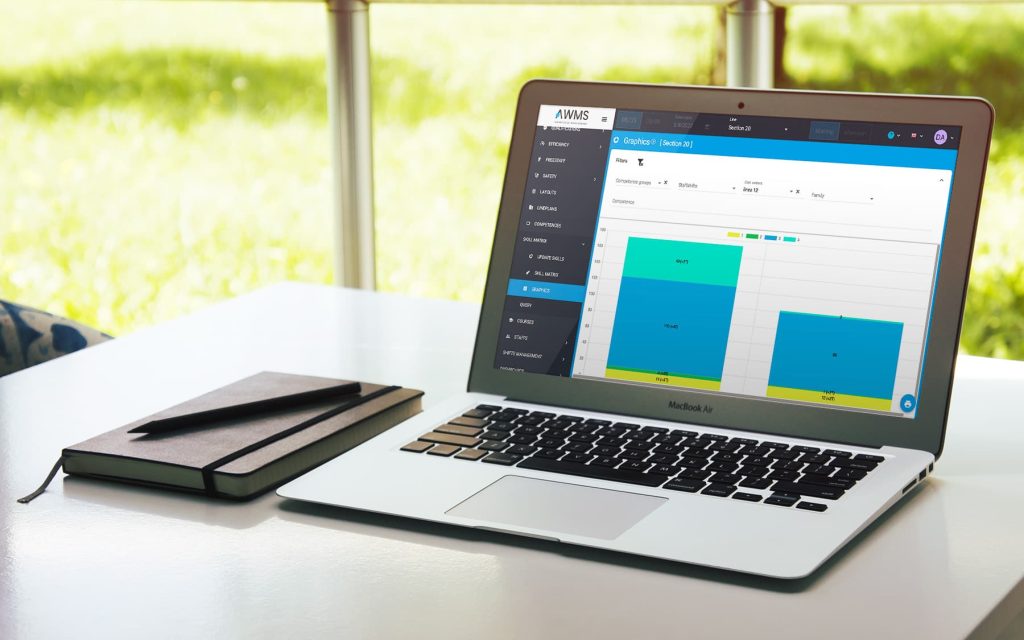
The software cross-references data related to:
- Employee Skills, meaning the staff’s ability to perform a specific task. Additionally, thanks to the coverage chart within the Skill Matrix, it is possible to visualize how skills are distributed among employees, detailing their proficiency levels. The coverage charts will show both the current snapshot of skills and the future state, thanks to automatic updates that adjust employees’ skill levels based on the hours they have spent on tasks.
- Employee Availability, analyzing their presence on-site, weekly working hours, and vacation schedule.
- Potential Termination, with the ability to anticipate when there might be a staffing shortfall due to the end of certain employees’ contracts. The purpose of this forecast is to help HR and recruiting teams understand when it will be necessary to hire new staff or potentially renew a contract.
But that’s not all! awm suite uses available data to help companies dealing with seasonality—especially in the food sector, which experiences peaks during holiday periods—identify seasonal or cyclical trends and patterns, forecasting when it will be necessary to increase staff and hire additional employees.